

In Disney City, discover the neighborhoods most popular with tourists and the areas that attract Brazilian families seeking safety, education, and stability
Orlandois more than just the entertainment capital of the world. The Florida city, famous for its Disney and Universal theme parks, has established itself as one of Brazilians’ favorite destinations, both for vacations and for those looking to move abroad permanently.
The contrast is evident in the numbers: in 2024, there were nearly700,000 tourists from Brazil, but also hundreds of families who chose to settle in the region, boosting the real estate market and formingone of the largest Brazilian communities in the United States.
Between the visitor who crosses International Drive in search of outlet malls and the resident looking for spots in A-rated schools, there are two cities within Orlando. And it is precisely this duality—between the vacationer and the resident who decides to start a new life—that defines the choice of Brazilians who dream of Florida.
With guidance from local real estate experts, we highlight theregions and neighborhoods in Orlando that are best suited for touristsseeking a well-rounded experience, as well as theareas most highly recommended for those planning to settle in the citypermanently.

The Brazilian Community in Numbers
Despite thenew immigration restrictions imposed by Donald Trump, the Brazilian presence in the United States has never been greater.The most recent data from the Ministry of Foreign Affairsestimate that approximately 1.9 million Brazilians reside in the country,22% of whomare concentrated in Florida.
According to the same report,approximately 180,000 Brazilians live in Orlando, and they are also major players in the state’s real estate market: a2024 report by Florida Realtorsindicates that 6% of foreign real estate buyers are from Brazil, driven by a desire forquality of life,investment diversification,andcultural affinity.
In terms of value, the investment is even more significant: purchases totaled $695 million during the period analyzed, the second-highest amount among all nationalities.
Tourism further boosts this presence: in 2024 alone,according to Visit Orlando,697,000 Brazilian tourists visited the city, cementing Brazil’s position as the third-largest source of tourists to the city.
Two maps, one city
This duality is reflected in the geography. On the one hand, there are areas likeKissimmee,Davenport, andLake Buena Vista, designed to accommodate visitors on short stays, with condos, hotels, restaurants, and immediate proximity to the parks. On the other hand, neighborhoods such asDr. Phillips,Windermere,Winter Garden,Lake Nona, andClermont, for example, are designed for families seeking good schools, a peaceful environment, and long-term infrastructure.
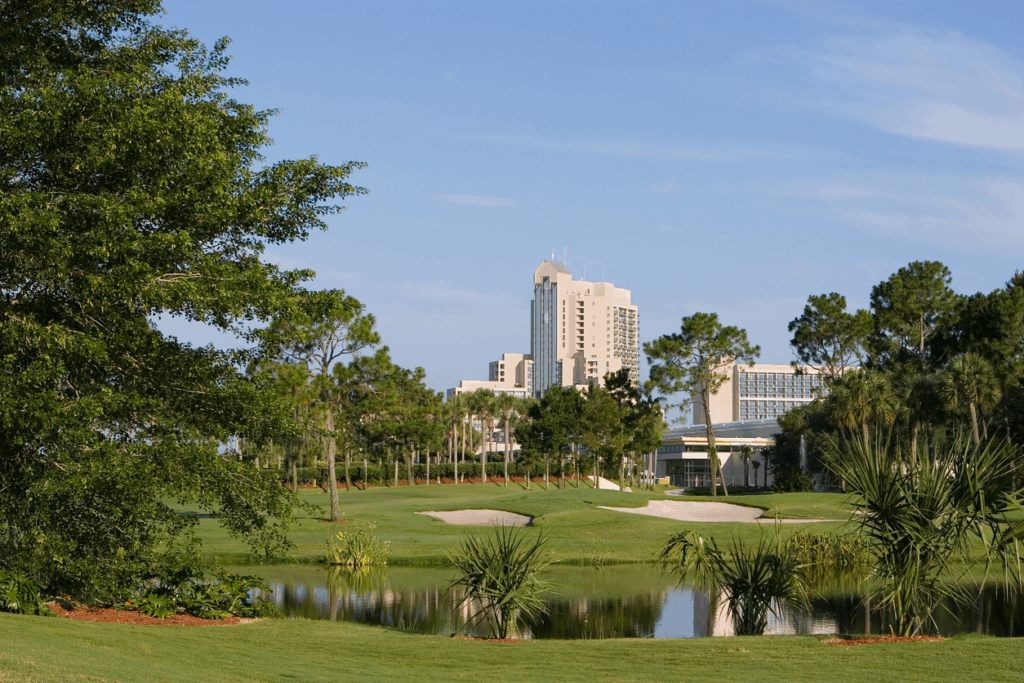
“The main difference between these areas is defined by municipal zoning regulations. There are areas designated for short-term rentals, such as Airbnb, and others where this is not permitted,” explainsAndrea Pointon, CEO ofPointon Realty. This dividing line—invisible on the map—determines not only where tourists stay, but also where the government invests in schools, hospitals, and urban services.
Edna Batini, CEO ofVitoria Realty, adds: “In Florida, the Department of Education assigns grades to schools, and neighborhoods with A-rated schools are considered excellent and highly sought after. For visitors, on the other hand, the priority is different: proximity to tourist attractions, easy access to highways, and the infrastructure of hotels and resort-style vacation home communities.”
The result is a city divided into two distinct experiences. The same tourist who spends a week in Kissimmee is unlikely to get a sense of what daily life is like for a Lake Nona resident, even though both places are less than half an hour apart.
From an agricultural town to Walt Disney World
Before becoming synonymous with tourism, Orlando was a small farming town in the heart of Central Florida. Its official incorporation as a city dates back to 1875, consolidating a settlement that had been growing since the 1830s in a region covered by swamps and orange groves. In fact, until the mid-20th century, citrus production was the driving force of the local economy, and the pace of life was predominantly rural.
The change began in the 1960s, with the announcement of the construction ofWalt Disney World. In 1971, the park’s opening transformed Orlando into a global destination. The impact was immediate: roads were built, hotels were constructed, and the city’s population—which stood at approximately 99,000 in 1970—grew to about 165,000 by 1990. Today, the Orlando metropolitan area is home to more than 2.9 million people, establishing itself as one of Florida’s major urban centers.

How is Orlando divided?
Geographically, Orlando spans a region characterized by lakes and flat terrain, typical of the Florida Peninsula. There are more than 100 lakes within the city limits and thousands in the metropolitan area. Many upscale neighborhoods, such as Windermere and Dr. Phillips, for example, have sprung up right along these shores, offering homes with docks and water sports.
The city is also strategically located from a logistical standpoint. Situated about an hour from the Atlantic coast and two hours from the Gulf of Mexico, it lies between Florida’s two major coastal hubs.Orlando International Airport (MCO)—one of the busiest in the United States—receives direct flights from Brazilian cities such as São Paulo, Brasília, Belo Horizonte, and Recife.
This geography explains part of the duality that defines Orlando today. Its proximity to nature coexists with rapid urban and tourist growth. While it is home to planned communities such as Lake Nona, it maintains a strong connection to the identity of neighboring small towns, such as Kissimmee and Winter Garden, which still preserve their historical and community characteristics.
Orlando for tourism
The heart of tourism beats inKissimmee, south of Orlando. The city, located in Osceola County, has its own identity, but it’s almost impossible to separate it from Disney. Its neighborhoods are filled with condominium complexes such asStorey Lake,Reunion Resort, andWindsor Hills, all designed to accommodate visitors. Homes with six, eight, or even more than ten bedrooms—many decorated with Disney characters—welcome families and groups of friends.
According to market data,more than 30% of properties in Kissimmee are geared toward vacation rentals. The flow is constant: every week, new neighbors move into the homes, transforming the city into a sort of open-air hotel. “The condos there are built with tourists in mind: concierge services, fully equipped recreational areas—everything to delight vacationers,” summarizes Pointon.
In addition to its proximity to the theme parks, Kissimmee has developed its own attractions.Old Town, with its flea markets and classic car shows, is a traditional stop.Fun Spot America, with its roller coasters and go-karts, attracts families looking for more affordable options.Airboattours alongthe Kissimmee Riverallow visitors to spot alligators in the swamps, while outlet malls attract visitors who can’t resist a little shopping.
Davenport, Lake Buena Vista, and more
A little further away, inDavenport, the appeal is similar, but at a lower cost. The epicenter isChampionsGate, a complex that combines resorts, golf courses, and vacation condos. For families looking for more space and tranquility, Davenport has become the natural alternative to Kissimmee, as experts point out.
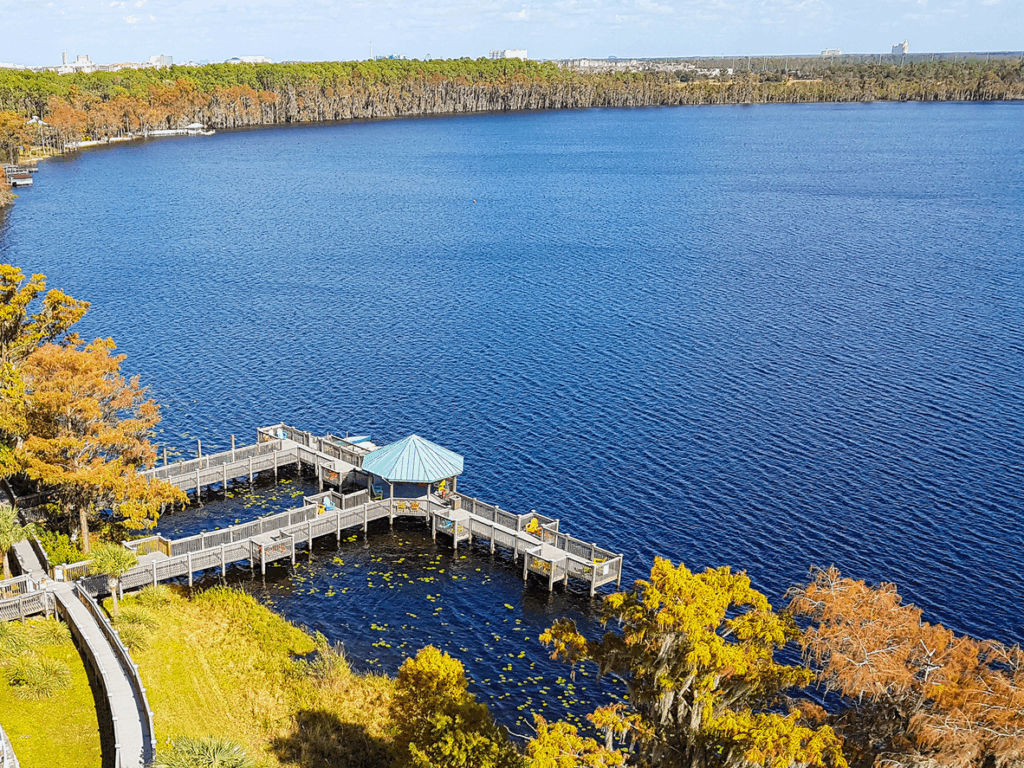
In the more urban area,International Drive (I-Drive)encapsulates the Orlando experience for those with only a few days to spare. It features 18 km of hotels, restaurants, outlet malls, and attractions.ICON Park, withits illuminated Ferris wheel, theSEA LIFE aquarium,Madame Tussauds, and nightclubs all vie for visitors’ attention. Edna points out: “The International Drive area, home to the Vista Cay condominium, is also a great option.”
Lake Buena Vista, on the other hand, is, in fact, Disney territory. Officially, it has only a few dozen permanent residents, but it welcomes thousands of visitors every day. It is home toDisney Springs, with its shops and restaurants, and most of the resorts in the complex. The atmosphere is designed to keep visitors immersed in the Disney universe, even outside the theme parks.
Orlando Residential
When the decision is to put down roots, the criteria for searching for a home change. Proximity to Mickey gives way to “the quality of the schools, the location, and safety,” says Edna Batini.
“People who move to Orlando are looking for quality of life, safety for their families, and better educational opportunities for their children,” adds Andrea Pointon. For residents, the priorities are different: schools, safety, and urban infrastructure are at the heart of their decisions. “Many families are very selective about this. The first question they ask is about the schools,” she adds.
Dr. Phillipsis one of the most traditional neighborhoods. Located betweenUniversal Orlando Resort andtheMall at Millenia, it is home to the famousRestaurant Row onSand Lake Road, a true culinary hub of the city. The neighborhood is also home to renowned schools, such asDr. Phillips High School, which has been recognized by the Florida Department of Education.

Next door,Windermere reinforcesits image of exclusivity. With luxury lakeside homes, gated communities, and golf courses, the city is home to celebrities and executives. Andrea compares: “For those seeking luxury and tradition, the top areas are Dr. Phillips and [the city of] Winter Park,” citingBella Collina, a high-end gated community with a Tuscan-inspired design. Its schools, such asOlympia High School, rank among the best.
Other options
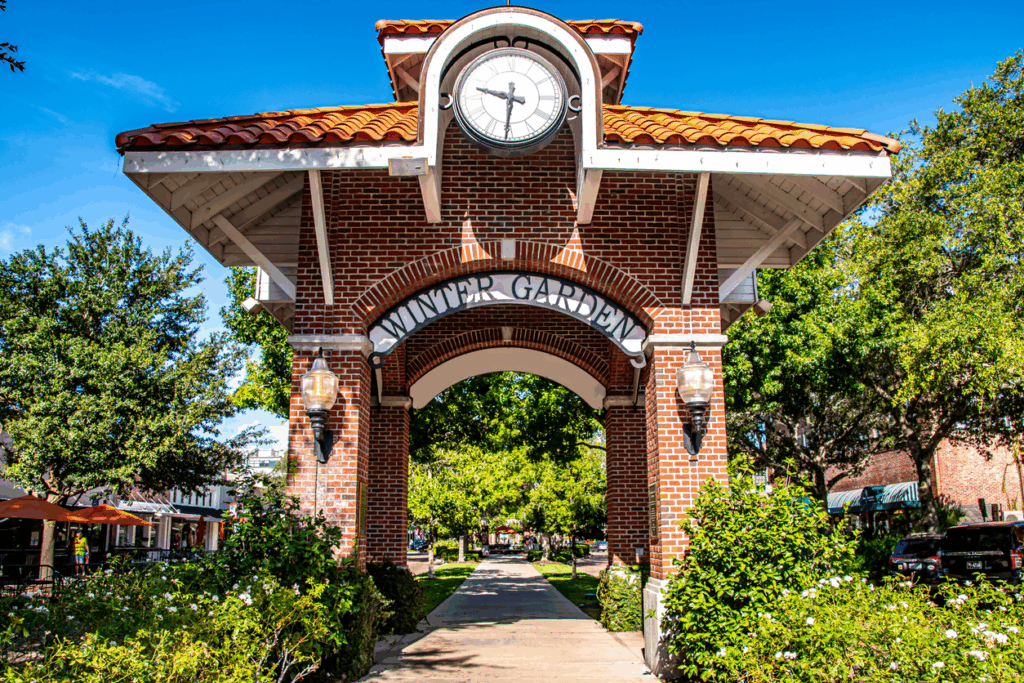
Further west,Winter Gardenhas become a symbol of expansion. The historic downtown still features cafes and antique shops, but new neighborhoods, such asHorizon West, are home to planned communities and schools like Windermere High School. “In recent years, Winter Garden has really stood out. It’s a geographically privileged area, close to Disney, from where you can see and hear the fireworks,” notes Andrea.
Clermont andMinneola, in the Orlando metropolitan area, attract residents by offering a high quality of life, safety, and access to nature. With planned communities, good schools, and easy access to major highways, experts say these areas are therefore ideal for families and professionals seeking a peaceful lifestyle without sacrificing proximity to downtown Orlando and its opportunities.

On the opposite side of the city,Lake Nonarepresents the planned future. Known as a “smart city,” it is home toMedical City, with hospitals and research centers, as well as state-of-the-art schools, such as Lake Nona High School. Andrea sums it up: “Lake Nona is a planned community with a more modern and tech-oriented vibe that attracts IT professionals and younger couples without children.”
Who is a new resident?
Who are the Brazilians who are moving beyond the role of tourists and settling in Orlando? Experts have identified a common profile: qualified professionals with established careers in Brazil who choose to start over in another country. It is a predominantly young community with a high level of education and well-defined plans.
“Generally, they are upper-class individuals in their 40s with school-age children,” explains Andrea Pointon. According to the real estate agent, they “are at the peak of their careers in Brazil and decide to move in search of greater security and peace of mind for their families.”
The perception of insecurity in Brazil appears to be a decisive factor. “The sense of threat and the lack of freedom in Brazil are common themes for everyone,” says the CEO of Pointon Realty. Many of those making this transition work in fields such as tourism, technology, and healthcare—sectors that have been growing steadily in Orlando.

Pointon also distinguishes between the profile of a homeowner and that of an investor. “The pure investor has a similar profile—in the same age group—and seeks to diversify their portfolio in a safe real estate market with good appreciation potential.”
In both cases, however, the choice of this city is driven by factors such as its proximity to Brazil—with direct flights—and a more attractive cost-benefit ratio compared to its sister city, Miami.
Brazilian Life in Orlando
The strength of the community is evident in many neighborhoods, a presence that has transformed local businesses and services: bilingual schools, Portuguese-language TV channels, and lawyers and doctors specializing in serving Brazilians have emerged.
“The city today offers a much more welcoming environment for settling in—with Brazilian restaurants, supermarkets carrying Brazilian products, and Brazilian TV channels, for example—making life much easier than it was 31 years ago, when I moved here,” Edna recalls.
Restaurants have become gathering places. Atthe traditionalCamila’s Restaurant, Brazilian dishes are served buffet-style, while the staff speaks Portuguese and the televisions air TV Globo programs.Mrs. Potato, a snack bar specializing in stuffed potatoes, has even been featured on the Food Network.Café MineiroandAdega Gaúchaare renowned for their barbecue. For those with a nostalgic palate, in fact, the shelves of supermarkets likeSeabra Foods andRokka’s Marketoffer products such as guaraná and pão de queijo.
Choosing where to stay in Orlando means deciding which map to follow. For tourists, Kissimmee, Davenport, Lake Buena Vista, and International Drive offer proximity to the parks and immediate recreational options. For residents, Dr. Phillips, Windermere, Winter Garden, Clermont, and Lake Nona guarantee high-performing schools, safety, and community infrastructure.
“The most common mistake is not preparing and not understanding how the real estate market works here. Finding a real estate agent you can trust is the key to a smooth transition,” warns Andrea Poiton. “I don’t see how you could go wrong with your choice, as long as you know what meets your needs,” adds Edna Batini.

